
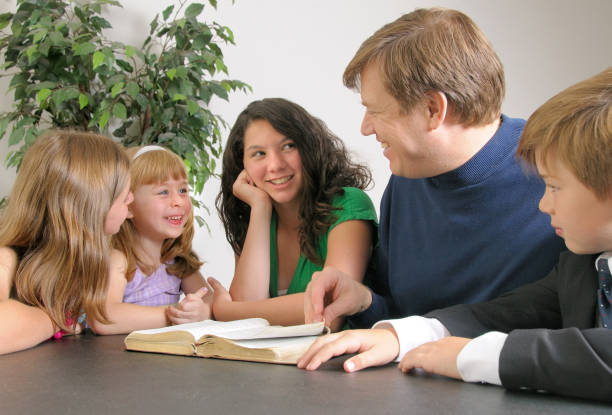
Teaching Children to See Family Life as an Opportunity to Serve
Family life is about more than living under the same roof. It is a place where children learn how to love, give, forgive, help, and care for others. Before children serve in their churches, schools, communities, or workplaces, they first learn what service looks like at home.
Teaching children to see family life as an opportunity to serve helps them understand an important Christian truth: serving others is part of following Jesus. Service does not always involve something big or noticeable. Sometimes it looks like helping a younger sibling, washing the dishes, encouraging a tired parent, sharing with someone, or taking responsibility without being asked.
The home provides countless opportunities for children to practice these values.
What Does It Mean to Serve in the Family?
Serving at home means looking beyond yourself and asking, “How can I help?”
For a child, service might mean putting away toys, helping set the table, carrying something for a family member, sharing a favorite item with a sibling, or helping clean a room. Older children might prepare a simple meal, help with household responsibilities, care for younger siblings, or support a family member who is having a difficult day.
These actions might seem small, but they teach important lessons.
Children begin to understand that family life is not built around one person's needs. Everyone has a role to play. Everyone has something to contribute.
Galatians 5:13 teaches, “through love serve one another.”
This is a beautiful principle for family life. Love is not only something we say. Love also appears through what we do for one another.
Teach Children That Service Begins With Love
Children need to understand why they serve, not only what they are expected to do.
If service is presented only as a list of chores, children might see helping at home as punishment or an obligation. When parents connect service with love, children begin to see household responsibilities differently.
You could tell your child, “We help each other because we are a family. When you help your brother, you are showing him love.”
This changes the conversation.
Instead of, “You need to clean because I told you to,” the lesson becomes, “Your contribution matters to our family.”
Jesus modeled this kind of servant-hearted living. In Mark 10:45, He said, “For even the Son of Man did not come to be served, but to serve.”
Jesus showed His followers that greatness is not measured by how many people serve us. It is also seen in our willingness to serve others.
Children need opportunities to see this truth lived out.

Let Children See You Serve
One of the strongest ways parents teach children about service is through their own example.
Children notice more than adults sometimes realize. They notice when a parent helps a neighbor, cares for an elderly relative, prepares a meal for someone who is struggling, or patiently helps a family member.
They also notice when parents refuse to help, complain about every responsibility, or treat certain tasks as beneath them.
This does not mean parents need to perform every act of service perfectly. Parents are human. Some days are exhausting. Some responsibilities feel frustrating.
What matters is allowing children to see a healthy attitude toward serving.
You might say, “I am tired today, but I know Grandma needs our help. Let us see what we can do.”
Simple moments like this teach children that service does not depend on feeling excited. Sometimes we serve because someone needs us.
Give Children Real Responsibilities
Children need opportunities to contribute meaningfully to family life.
Give them responsibilities suited to their age and abilities. A young child might put clothes in the laundry basket or help gather toys. An older child might wash dishes, prepare part of a meal, organize a room, or help with younger siblings.
The goal is not to create a perfect household. The goal is to help children develop responsibility and consideration.
Avoid doing everything for your children simply because it is faster. There will be days when it is easier to handle a task yourself. Yet when children participate, they learn skills and discover the value of contributing.
Let them know their help matters.
A simple “Thank you for helping” or “You made things easier for our family today” helps children recognize the impact of their actions.
Teach Them to Notice Needs
Service begins with noticing.
A child who learns to look around and recognize a need becomes more thoughtful toward others.
Teach your children to ask questions such as:
“Does someone need help?”
“How is my brother feeling?”
“What needs to be done?”
“Is there something I can do?”
This habit helps children move from self-centered thinking toward consideration.
Perhaps a sibling is struggling with homework. Perhaps a parent is carrying several things. Perhaps a younger child needs help getting ready. Perhaps a family member is having a difficult day.
Instead of waiting for someone to give instructions, children gradually learn to recognize opportunities to help.
Philippians 2:4 gives this encouragement: “Let each of you look out not only for his own interests, but also for the interests of others.”
This principle applies beautifully within the home.
Make Service a Family Culture
Service becomes easier when it is part of the family's everyday life.
Families might choose one evening each week to do something helpful together. They could prepare food for someone, visit a relative, clean a shared space, help a neighbor, or support a church activity.
Service does not always need to involve money.
A family could write an encouraging note, make a phone call to someone who feels lonely, share food, help someone with a task, or spend time listening to someone who needs encouragement.
These experiences help children understand that serving others is not reserved for special occasions.
It is a way of living.
Do Not Force Children to Seek Recognition
Children naturally enjoy receiving praise. There is nothing wrong with celebrating a child's effort. Still, parents should help children understand that service is not about receiving attention.
Teach them to do good even when nobody notices.
Matthew 6:3-4 teaches about giving without seeking public recognition. The principle is important for children to learn early: God sees the heart behind what we do.
This does not mean parents should never praise their children. Encouragement is important. Rather, help them develop an inner desire to do what is right because it reflects love and honors God.
A child who learns to serve without expecting applause develops a stronger sense of humility.
Help Children Serve Their Siblings
Siblings often provide the first real training ground for service.
Children might struggle to share, take turns, forgive, or help one another. These moments provide opportunities for parents to teach.
If one child is struggling, encourage a sibling to help rather than laugh. If one child has something another wants, teach generosity. When conflict happens, guide children toward forgiveness and restoration.
This does not mean forcing children to tolerate harmful behavior. Healthy boundaries remain important. Service should never mean allowing someone to mistreat you.
Instead, children should learn that loving their siblings involves patience, kindness, honesty, forgiveness, and practical help.
Teach Service Without Creating Perfectionism
There is a difference between teaching children to serve and expecting them to meet unrealistic standards.
Children will forget chores. They will complain. They will sometimes help with the wrong attitude. They will make mistakes.
Parents should use these moments as teaching opportunities rather than turning every mistake into a character judgment.
Instead of saying, “You are so selfish,” address the behavior.
“You did not want to help your sister today. Let us talk about why helping matters.”
This approach corrects the behavior while reminding the child that their identity is not defined by one poor choice.
Grace belongs in a Christian home.
Parents are also learning. Children are learning. Family life provides room for growth.
Connect Service to Faith
Children need to understand that serving others is part of their relationship with God.
Jesus taught His followers to love God and love others. When children serve their families with a willing heart, they are learning to put their faith into action.
James 2:17 reminds believers that faith without works is dead.
Faith is not only about what happens during church services or family Bible study. Faith also shapes how we speak to one another, how we respond to needs, how we handle responsibilities, and how we treat the people closest to us.
The kitchen, living room, car, dining table, and bedroom all become places where children practice Christian character.
Celebrate the Joy of Giving
Service should not always feel like a burden.
Help children discover the joy that comes from making someone else's day easier.
After helping someone, talk about how the experience felt.
“Did you notice how happy Grandma was when you helped her?”
“How did your brother respond when you encouraged him?”
“What did you learn from helping today?”
These conversations help children connect service with joy, compassion, and gratitude.
Over time, they begin to see something important: helping others does not always take something away from us. Often, it gives us an opportunity to experience love in action.
Building a Servant-Hearted Family
Teaching children to see family life as an opportunity to serve does not require complicated programs. It starts with everyday choices.
Let them see you serve.
Give them meaningful responsibilities.
Teach them to notice needs.
Encourage them to help their siblings.
Connect service with Scripture.
Praise their effort without making recognition the goal.
Give them room to make mistakes and learn.
Most importantly, remind them that service begins with love.
A Christian family is not defined by having a perfect home, perfect children, or perfect routines. It is shaped by the way family members continually choose love, grace, forgiveness, responsibility, and care.
Deuteronomy 6:6-7 reminds parents to teach God's ways to their children throughout everyday life. Family life itself becomes part of the lesson.
Every meal provides an opportunity to serve. Every chore provides an opportunity to take responsibility. Every sibling conflict provides an opportunity to practice forgiveness. Every difficult day provides an opportunity to show compassion.
When children learn to serve at home, they carry those lessons beyond the home.
They grow into adults who notice people, care about others, take responsibility, and understand that their lives are not only about what they receive.
The home becomes their first classroom for Christian service.
And sometimes, the smallest act of help becomes one of the most meaningful lessons a child remembers.

Facebook
Instagram
Youtube
TikTok
Facebook
Website
LinkedIn