
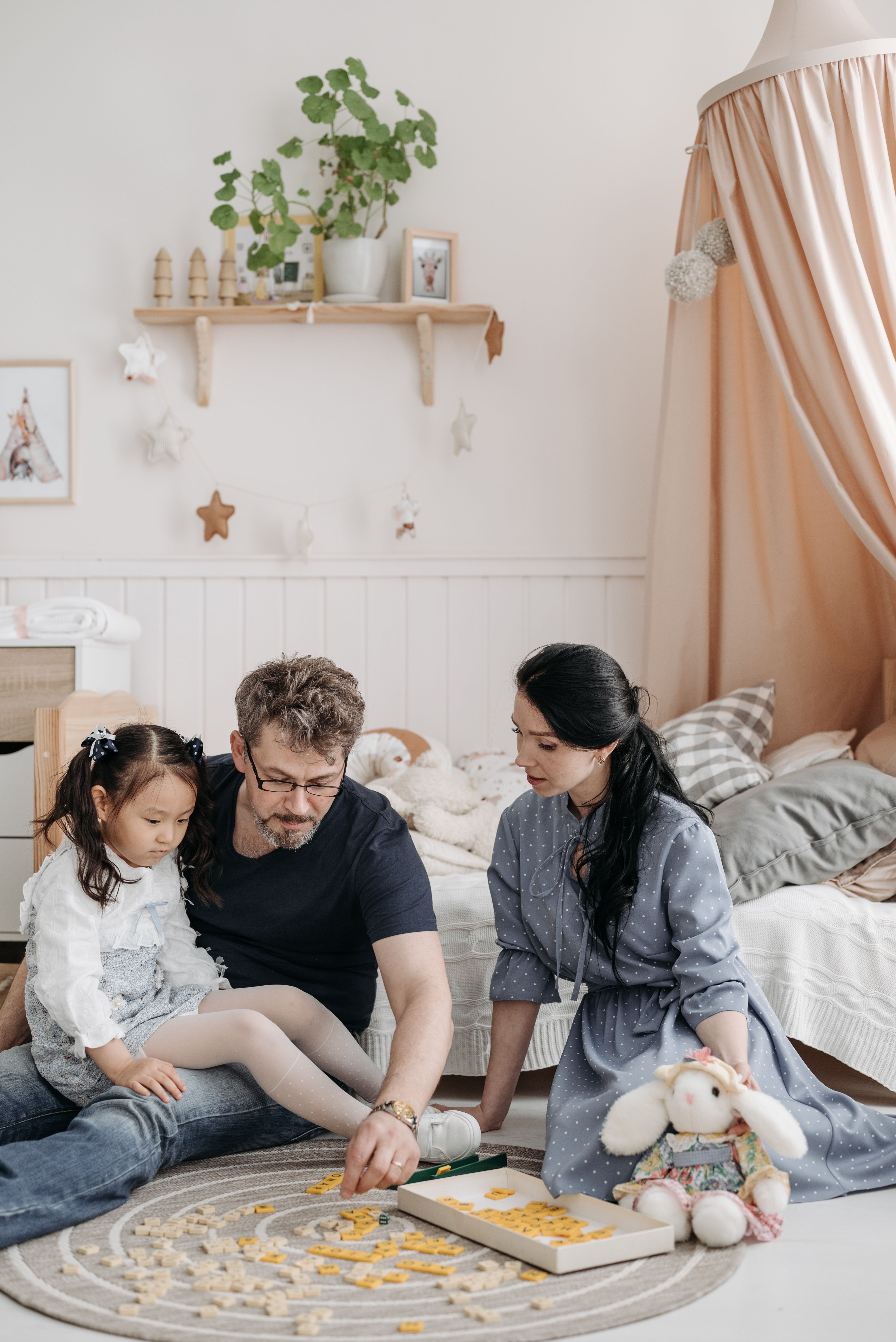
How Families Can Make Their Home a Place of Belonging
Home is more than a building with walls, furniture, and rooms. It is where people should feel safe enough to be themselves, loved enough to make mistakes, and valued enough to know their presence matters.
For many families, creating a home like this does not require expensive furniture, a big house, or a perfect family routine. It begins with something much simpler: how family members treat one another.
A home becomes a place of belonging when people know, "I am loved here. I am heard here. I matter here."
Family life is not always peaceful. There will be disagreements, tired mornings, misunderstandings, busy schedules, and moments when someone loses their patience. A home of belonging does not mean a home without problems. It means a home where people know they can work through those problems together.
For Christian families, this kind of home reflects the heart of God. Scripture reminds us that love, kindness, patience, forgiveness, and compassion should shape the way we relate to one another.
So, how can families make their home a place where everyone truly feels they belong?
1. Make Love Something Your Family Experiences Every Day
Most people know their family loves them, but hearing and experiencing that love still matters.
Tell your children you love them.
Hug them.
Ask about their day.
Listen when they want to talk.
Celebrate their small achievements.
Sit with them when they are having a difficult day.
The same applies to spouses and other family members. Love should not only be assumed. It should be expressed.
The Bible gives families a beautiful picture of what love looks like.
1 Corinthians 13:4-7 (NKJV)
"Love suffers long and is kind; love does not envy; love does not parade itself, is not puffed up; does not behave rudely, does not seek its own, is not provoked, thinks no evil; does not rejoice in iniquity, but rejoices in the truth; bears all things, believes all things, hopes all things, endures all things."
Love is not only something we say. It is something we practice in ordinary moments.
2. Create a Home Where Everyone Feels Heard
One of the simplest ways to help someone feel like they belong is to listen to them.
Children especially need to know their thoughts and feelings matter. Their concerns might seem small to an adult, but they are often important to the child experiencing them.
When your child wants to tell you a long story about something that happened at school, listen.
When your teenager wants to talk about something difficult, resist the urge to immediately give a lecture.
When your spouse shares a concern, listen before preparing your response.
Listening does not mean agreeing with everything someone says. It means giving them the dignity of being heard.
James 1:19 (NKJV)
"So then, my beloved brethren, let every man be swift to hear, slow to speak, slow to wrath."
A family member who knows they can speak without immediately being dismissed is more likely to open up when something is wrong.
3. Let Your Home Be a Safe Place to Make Mistakes
Nobody gets everything right.
Children forget things. Parents lose their patience. Teenagers make poor choices. Spouses misunderstand each other.
If every mistake is met with shouting, shame, or rejection, family members might eventually stop sharing their struggles.
A home of belonging should be a place where people can admit, "I made a mistake," without believing the mistake has changed their worth.
This does not mean ignoring wrongdoing. Families still need boundaries and consequences. It means correcting behavior without making someone feel unwanted.
There is a difference between saying, "What you did was wrong," and saying, "You are a disappointment."
One corrects the behavior.
The other attacks the person.
Grace allows families to correct, forgive, learn, and try again.

4. Make Time for One Another
Belonging grows through shared experiences.
You do not always need a special family vacation or expensive outing. Some of the strongest family memories come from ordinary moments.
Eat dinner together when possible.
Take a walk.
Play a board game.
Cook together.
Watch a movie.
Read together.
Pray before bed.
Sit outside and talk.
Put the phones away for a while and give one another your attention.
These moments might seem small, but they tell your family something important: "You are worth my time."
In a busy world, giving someone your attention is one of the clearest ways to communicate love.
5. Build Family Traditions
Traditions give families something to look forward to and help create a shared identity.
They do not have to be complicated.
Maybe every Friday night is family movie night.
Maybe Sunday lunch is a time for everyone to sit around the table.
Maybe birthdays include a special family prayer.
Maybe Christmas includes reading the story of Jesus' birth together.
Maybe everyone shares one thing they are grateful for before going to bed.
These traditions become part of a family's story.
Years later, children often remember these simple routines because they helped them feel connected to something bigger than themselves.
6. Teach Your Family to Speak with Kindness
Words have a powerful place in the home.
A home can have beautiful furniture and still feel uncomfortable if the people inside constantly speak harshly to one another.
Teach family members to disagree respectfully.
Teach children to say "please," "thank you," and "I'm sorry."
Teach siblings to speak to each other with kindness.
As parents, model the behavior you want to see.
Ephesians 4:29 (NKJV)
"Let no corrupt word proceed out of your mouth, but what is good for necessary edification, that it may impart grace to the hearers."
Sometimes a gentle word can change the entire atmosphere of a home.
7. Practice Forgiveness
Every family needs forgiveness.
There will be hurt feelings. There will be arguments. Someone will say something they wish they could take back.
Holding onto every mistake makes it difficult for a family to move forward.
Forgiveness does not pretend the hurt never happened. It gives people room to heal and rebuild trust.
Jesus taught His followers to live with a forgiving heart.
Colossians 3:13 (NKJV)
"Bearing with one another, and forgiving one another, if anyone has a complaint against another; even as Christ forgave you, so you also must do."
Forgiveness is especially powerful when children see their parents practice it.
When a parent says, "I was wrong, and I'm sorry," the child learns that humility is not weakness.
8. Let Everyone Know They Have a Place
Belonging also means feeling included.
Give children opportunities to contribute to family life. Let them help prepare meals, clean up, choose a family activity, or participate in family decisions when appropriate.
Their contribution does not need to be perfect.
A small child helping to set the table might take twice as long, but the lesson goes beyond setting plates. The child learns, "I have a place here. I contribute to this family."
Teenagers also need this sense of belonging. Give them responsibilities and listen to their ideas. Let them know their presence is important to the family.
Everyone needs to feel needed.
9. Make Faith Part of Everyday Family Life
For Christian families, belonging is also connected to knowing that the home belongs to God.
Faith does not have to be complicated.
Pray together.
Read Scripture together.
Thank God for answered prayers.
Talk about God's goodness during ordinary conversations.
Pray for one another when someone is struggling.
Make room for questions about faith.
Deuteronomy 6:6-7 (NKJV)
"And these words which I command you today shall be in your heart. You shall teach them diligently to your children, and shall talk of them when you sit in your house, when you walk by the way, when you lie down, and when you rise up."
Faith becomes meaningful to children when they see it lived out in everyday family life.
They learn that prayer is not only for church. Scripture is not only for Sunday. God's presence is part of ordinary life.
10. Remember That Belonging Does Not Require Perfection
Perhaps the most important thing to remember is this: your family does not need to be perfect to have a loving home.
There will be difficult seasons.
There will be financial pressures.
There will be disagreements.
There will be days when everyone is tired.
There will be moments when you wish you had responded differently.
Do not let the pursuit of a perfect family prevent you from enjoying the family God has given you.
A healthy home is not one where everyone always agrees. It is one where people know they are loved even when life gets difficult.
Romans 12:10 (NKJV)
"Be kindly affectionate to one another with brotherly love, in honor giving preference to one another."
Small choices made consistently can change the atmosphere of a home.
A kind greeting in the morning.
A hug after a difficult day.
A family prayer.
An apology.
A shared meal.
A listening ear.
A word of encouragement.
These things might seem ordinary, but they create something extraordinary over time.
Conclusion
A home of belonging is not created in one day.
It is built through hundreds of small moments.
It is built when parents choose to listen instead of dismissing.
It is built when children learn to speak with kindness.
It is built when family members forgive each other.
It is built when everyone has a place at the table.
It is built through laughter, prayer, conversations, shared meals, difficult discussions, and quiet moments together.
Most importantly, it is built through love.
Your family does not need a perfect home. They need a home where they know they belong.
A place where a child knows, "My family loves me."
A place where a teenager knows, "I can talk to my parents."
A place where a husband and wife know, "We are on the same team."
A place where everyone knows, "Even when we disagree, we are still family."
And for a Christian family, a home of belonging can become something even more beautiful: a place where people experience a small reflection of God's love, grace, forgiveness, and faithfulness.
Start with something simple today.
Put your phone down and listen.
Share a meal.
Pray together.
Tell someone in your family, "I'm glad you're here."
Sometimes, creating a home of belonging begins with one small decision to make someone feel seen, loved, and valued.

Facebook
Instagram
Youtube
TikTok
Facebook
Website
LinkedIn