
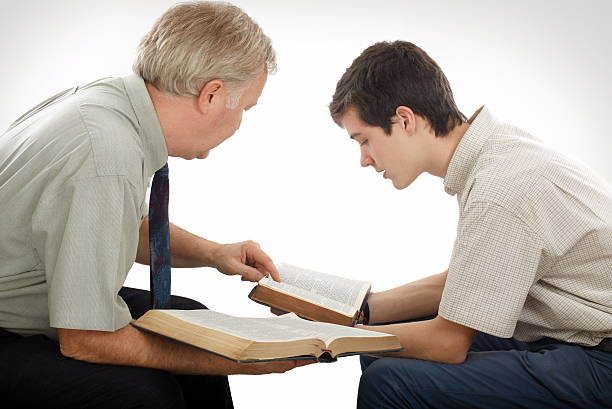
Teaching Sons Biblical Manhood
Raising a son is a meaningful responsibility. Parents are not only helping him grow into adulthood. They are also helping shape the kind of man he will become, the way he treats others, the choices he makes, and the values that guide his life.
In a world where boys often receive confusing messages about what it means to be a man, Christian families have an important opportunity to give their sons a stronger foundation. Biblical manhood is not about being loud, aggressive, emotionally distant, or always having control. It is about becoming a man who knows God, understands responsibility, treats people with honor, shows self-control, and uses his strength to serve others.
Teaching biblical manhood starts long before a boy becomes an adult. It begins in ordinary moments at home.
What Is Biblical Manhood?
Biblical manhood starts with identity.
A son needs to understand that his identity is not based on how strong he is, how much money he earns, how popular he becomes, how attractive he looks, or how successful he is. His value begins with God.
Genesis 1:27 teaches that human beings are created in the image of God. This gives every child dignity and worth.
A boy who understands that he is created by God does not need to prove his value by putting others down. He learns that strength does not require cruelty and confidence does not require pride.
Biblical manhood also involves responsibility. A godly man learns to take responsibility for his words, actions, choices, relationships, and responsibilities. He learns to admit when he is wrong instead of always searching for someone else to blame.
Galatians 6:5 teaches the importance of carrying one's own responsibilities. This is a valuable lesson for boys as they grow.
Biblical manhood is also shaped by love. Jesus showed strength through humility, compassion, obedience, and service. He cared for people, spoke truth, showed mercy, and remained faithful to the Father's will.
That is the kind of strength Christian parents should help their sons understand.
Teach Him That Strength and Kindness Belong Together
Many boys grow up hearing messages that suggest kindness is weakness.
A boy cries, and someone tells him to toughen up. He expresses fear, and someone tells him that men should not be afraid. He wants to show affection, and he is teased for being too soft.
These messages can teach boys to hide parts of themselves instead of learning how to handle their emotions in healthy ways.
Scripture gives a different picture.
1 Corinthians 16:13-14 connects courage with love: “Watch ye, stand fast in the faith, be brave, be strong. Let all that you do be done with love.”
Strength and love are not opposites.
A strong son should know how to defend what is right without becoming cruel. He should know how to speak firmly without humiliating people. He should know how to stand up for someone who is being mistreated.
Teach your son that kindness does not make him less of a man. It shows that he has control over his strength.
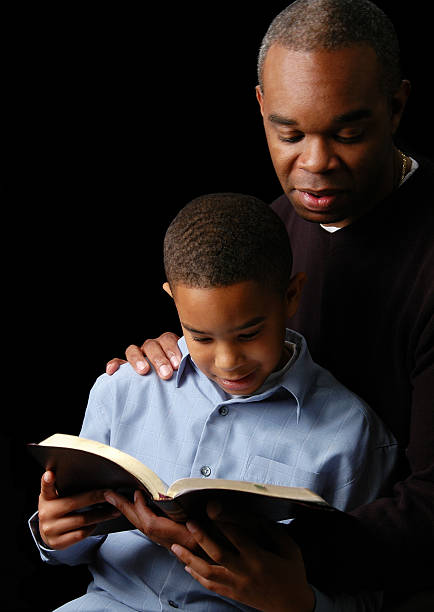
Teach Him to Respect Women and Everyone Around Him
Biblical manhood includes learning how to treat people with dignity.
A son should learn early that girls and women are not objects to impress, control, or use. They are people created in God's image and worthy of respect.
This lesson starts at home.
He watches how his father speaks to his mother. He notices how adults talk about women. He listens to conversations about relationships. He observes whether people are treated with patience or disrespect.
Parents should teach boys to use respectful language, honor boundaries, listen when someone speaks, and treat others with consideration.
Ephesians 5:1-2 points believers toward a life of love and calls them to imitate God. A son's understanding of relationships should be shaped by that kind of love.
Respect should also extend to siblings, teachers, friends, older people, younger children, and people who have nothing to offer him in return.
A boy who learns to treat people well when nobody is watching is learning an important part of biblical character.
Teach Him That Responsibility Is Part of Growing Up
One of the simplest ways to teach biblical manhood is to give your son responsibilities.
Do not wait until he is a teenager to teach him responsibility.
A young boy can learn to clean up after himself. He can help with simple household tasks. He can care for his belongings. He can learn to keep promises and complete assignments.
As he grows, his responsibilities should grow too.
These tasks are not about making a child earn love or proving his worth. They help him understand that families work together and that maturity involves responsibility.
Proverbs 22:6 reminds parents of the importance of training children in the right direction.
When a son forgets something, help him learn from it. When he makes a mistake, guide him toward taking responsibility instead of rescuing him from every consequence.
Sometimes one of the best things a parent can say is, “What do you think you should do to make this right?”
That question teaches ownership.
Teach Him That His Emotions Are Not His Enemy
Boys need emotional guidance too.
Teaching biblical manhood does not mean teaching a son to ignore sadness, fear, disappointment, grief, or frustration. It means teaching him how to bring those emotions to God and respond to them wisely.
Psalm 34:18 reminds us that God is near to the brokenhearted.
A son should know that there is room for tears. There is room for honest conversations. There is room to say, “I am afraid,” “I am hurt,” or “I do not understand.”
At the same time, emotional honesty should be paired with self-control.
Galatians 5:22-23 includes self-control as part of the fruit of the Spirit.
Teach your son that feeling angry is different from hurting someone because he is angry. Feeling disappointed is different from treating everyone badly because he is disappointed.
He needs to learn how to pause, pray, speak honestly, and choose his response.
These lessons will serve him in friendships, marriage, work, leadership, and parenting.
Teach Him to Admit When He Is Wrong
One of the clearest signs of maturity is the ability to say, “I was wrong.”
This is difficult for children and adults alike.
Parents sometimes focus so much on obedience that they forget to teach repentance. Your son needs both.
When he hurts his sibling, teach him to apologize. When he lies, teach him to tell the truth. When he breaks something, teach him to take responsibility. When he says something unkind, help him recognize the damage his words caused.
Proverbs 28:13 teaches that a person who confesses and turns away from wrongdoing receives mercy.
Your son does not need to become a boy who never makes mistakes. He needs to become a boy who knows what to do after he makes one.
Show him that an apology is more than saying “sorry.” It means acknowledging what happened, taking responsibility, and making a sincere effort to do better.
Teach Him That Purity Starts With the Heart
Biblical manhood also involves teaching sons how to honor God with their bodies, minds, words, and relationships.
This conversation should happen in age-appropriate ways as a child grows.
Teach him that women are people, not entertainment. Teach him that his thoughts matter. Teach him that what he watches, listens to, and consumes shapes his heart.
Job 31:1 speaks about making a commitment to purity in one's thoughts and actions.
Parents should create an environment where sons feel safe asking honest questions about relationships, sexuality, temptation, and growing up.
Silence does not remove confusion. Healthy conversations give children guidance.
Your son needs to know that temptation does not make him a failure. What matters is learning to respond to temptation with wisdom, self-control, prayer, and accountability.
Let Him See Biblical Manhood in Action
Children learn as much from what parents do as what they say.
A father who tells his son to control his anger but constantly explodes is teaching a lesson through his behavior.
A parent who tells a son to respect women but speaks disrespectfully at home is sending a mixed message.
A parent who tells a boy to tell the truth but lies when it is convenient teaches another lesson.
This is why example matters.
Deuteronomy 6:6-7 emphasizes teaching God's truth throughout everyday life. Faith is woven into ordinary conversations and daily routines.
Your son watches how you handle disappointment. He notices how you respond when someone treats you unfairly. He sees whether prayer is part of your life. He notices whether you apologize when you are wrong.
You do not need to be a perfect parent.
You need to be willing to model repentance, humility, courage, faith, and love.
When your son sees you say, “I handled that badly. Please forgive me,” he learns something powerful about maturity.
Teach Him That Leadership Means Service
The world often defines leadership by power, position, money, or control.
Jesus gave a different example.
Mark 10:45 teaches that the Son of Man came to serve rather than to be served.
This is one of the most important lessons a Christian son needs.
Leadership is not about getting everyone to do what you want. It is about responsibility, sacrifice, wisdom, and service.
A son who learns to serve at home is learning valuable leadership skills.
Let him help someone. Let him carry responsibility. Let him encourage a younger sibling. Let him help with family needs. Teach him that leadership includes noticing what needs to be done and stepping forward with the right attitude.
A man does not become strong because everyone serves him. He becomes stronger when he learns how to serve others well.
Teach Him to Build His Life on God's Word
Finally, sons need a foundation that remains steady when life changes.
Friends will change. Circumstances will change. Expectations will change. Success will look different at different stages of life.
God's Word provides a lasting foundation.
Psalm 119:105 says, “Your word is a lamp to my feet and a light to my path.”
Teach your son to pray. Teach him how to read Scripture. Talk about biblical decisions during real-life situations. Help him understand that faith is not something reserved for church services.
Faith belongs in friendships, school, work, relationships, finances, decisions, failures, victories, and private moments.
Give him opportunities to ask questions. Let him wrestle with difficult ideas. Teach him how to seek God's wisdom rather than simply giving him rules.
The goal is not to raise a son who knows how to repeat Christian language.
The goal is to help raise a young man whose life reflects Christ.
Biblical Manhood Is Built One Lesson at a Time
Teaching sons biblical manhood is not one big conversation. It happens through hundreds of small moments.
It happens when you teach him to say sorry.
It happens when you ask him to help around the house.
It happens when you listen to him after a difficult day.
It happens when you teach him to control his anger.
It happens when you talk openly about purity.
It happens when you teach him to respect women and honor other people.
It happens when you pray together.
It happens when you point him back to God's Word.
And perhaps most importantly, it happens when he sees you living out the same truths you are teaching him.
Your son does not need a perfect picture of manhood. He needs a biblical one.
He needs to know that real strength includes gentleness. Real courage includes faith. Real leadership includes service. Real maturity includes responsibility. Real masculinity includes self-control, compassion, humility, and love.
As parents, the goal is not to raise sons who fit a cultural image of what a man should be.
The goal is to raise sons who know God, understand their identity in Him, walk in wisdom, treat people with honor, and grow into men whose lives reflect Christ.
That journey starts at home, one faithful lesson at a time.

Facebook
Instagram
Youtube
TikTok
Facebook
Website
LinkedIn